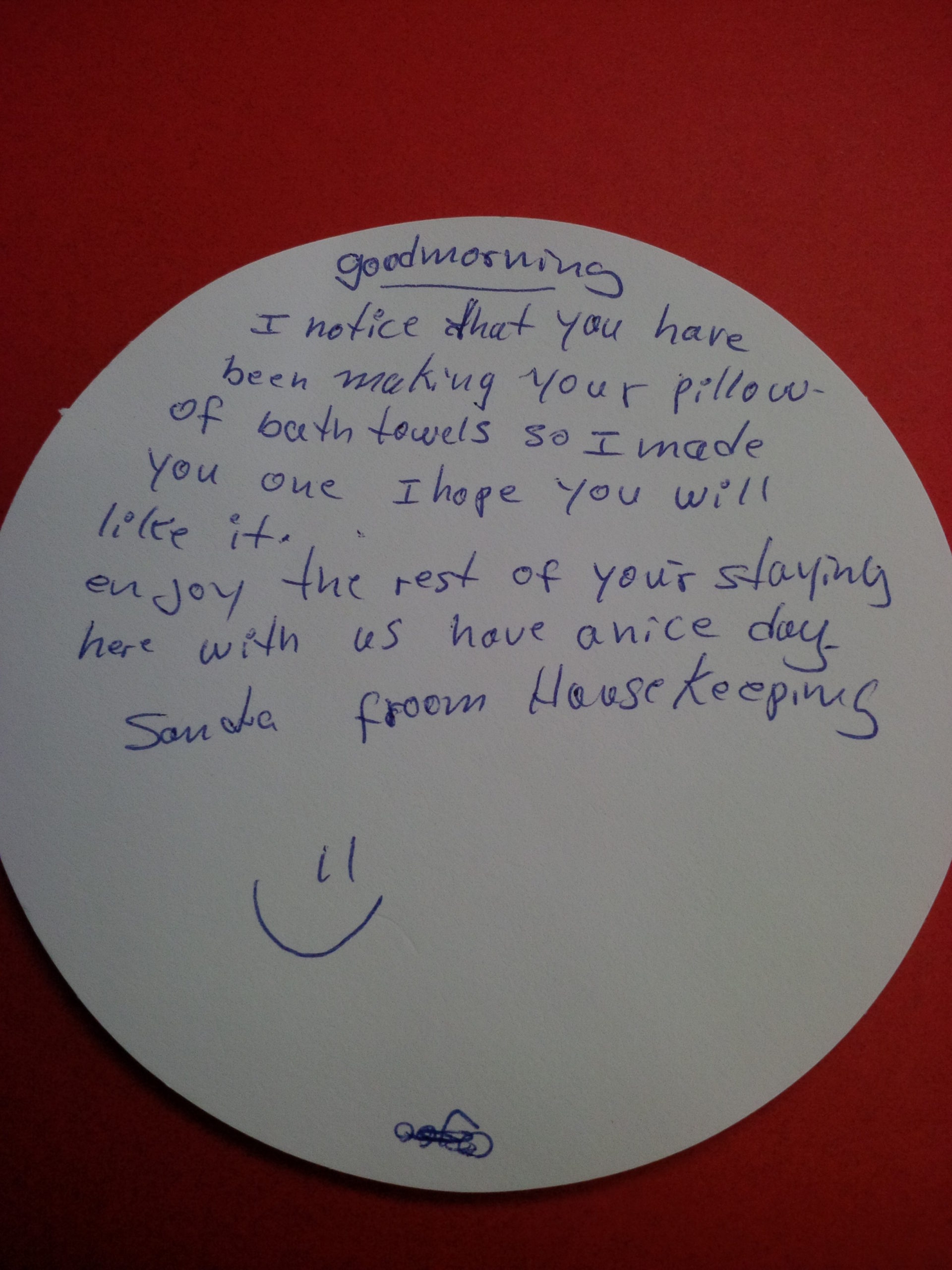
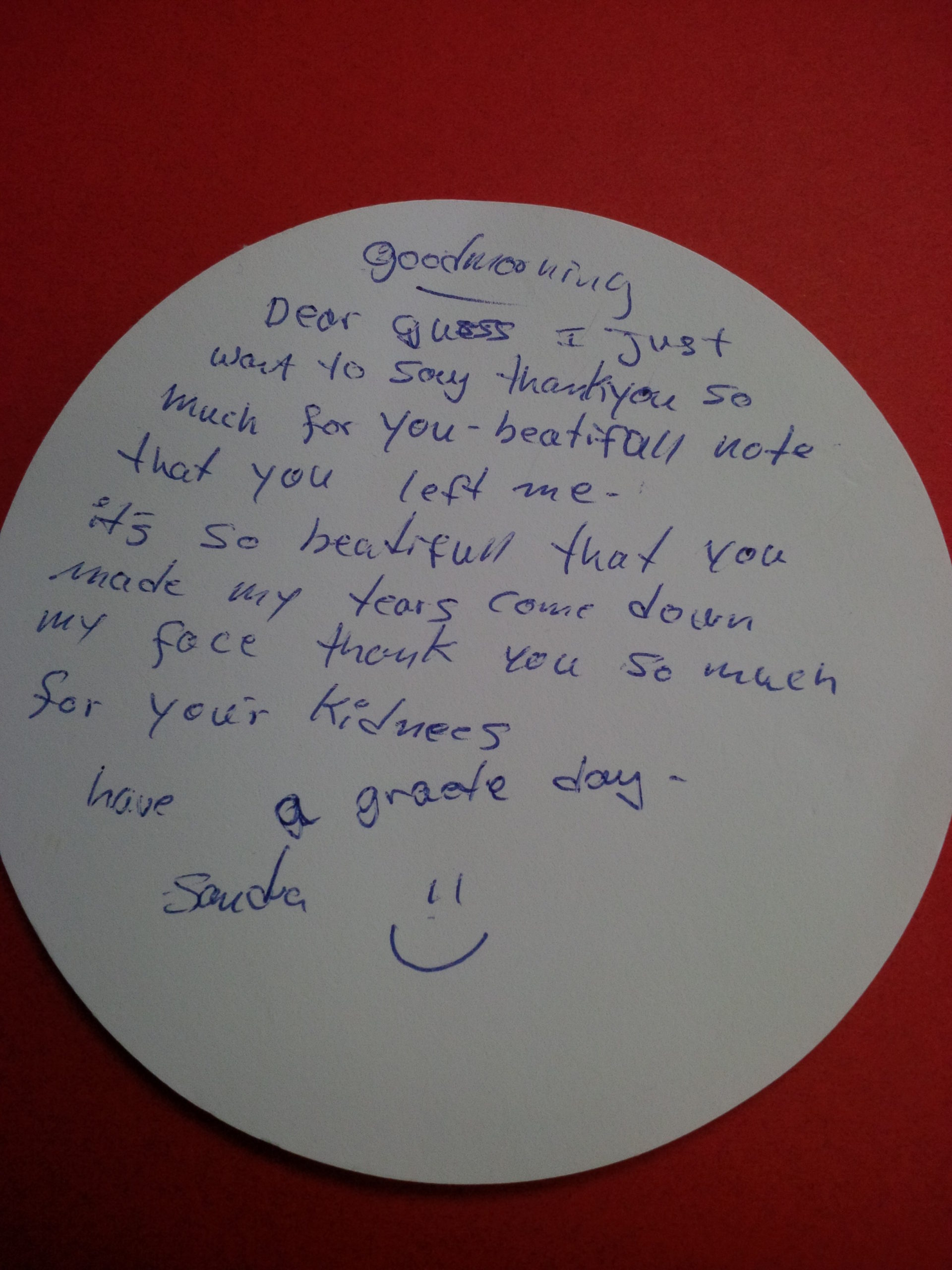
Surprise! Creating guest surprises is harder than it looks…

August 26, 2014

Last Christmas, the Canadian airline WestJet surprised a plane full of arriving passengers at baggage claim by delivering fully wrapped gifts they had just specifically requested from “Santa” only hours before at their departure gate.  (If you haven’t seen that video, grab some tissues and watch it here.)

To date, the WestJet Christmas Miracle video has received nearly 40 million views on YouTube, making it the envy of hospitality marketers around the world.  Marketers – and their CEO bosses – watched longingly as the media attention spotlight on WestJet grew brighter and the video view count grew higher, and they all had the same thought:  I want a “WestJet video” for MY brand.

Alas, most of them are likely to retire with “I wish I had a WestJet video” still on their career bucket list, and here’s why:  surprises – especially of that magnitude – are bloody hard work.

Pulling off a surprise like that requires precision timing, which requires a recipe of planning, staffing, money, creativity, and problem solving.  You cannot fumble at the goal line.  You cannot plan a “partial surprise.”  You can’t get the timing “almost right.”  You get ONE SHOT.  So you have to make it count, or every bit of investment you put into it is a big ol’ waste.

This leaves no wiggle room for indecision, executive in-fighting, budget paralysis, miscommunication, or distraction from the focus.  And that’s a lot to ask of ANY brand, at ANY size.  That “little” five minute video required four months of singular planning attention, 150 WestJet employees, an extraordinary budget, and extensive marketing resources in two cities.  Such a level of orchestration deserves every bit of brand-envy it receives, because marketers worth their salt know it’s a rare phenomenon.

To determine if your brand has what it takes to successfully leverage the magic of surprise – at any level – ask yourself…

  • Do we embrace fun?
  • Do all our in-house departments work together harmoniously, and if not…can they?
  • Are we comfortable taking risks?
  • Are we willing to spend unanticipated money if needed to protect the surprise all the way to the finish line?
  • Do we complete our regular, non-surprise-oriented projects on time, and with precision?

If the answer to any of those questions was “no,” then you should think twice before investing a ton of resources into planning a one-shot-deal surprise for your guests.  You will save yourself a lot of misery (and money) by using other tools in your marketing toolbox instead.

Parting tip:  If you ARE planning to create a big surprise, keep this in mind…the bigger and cooler the surprise, the higher the bar is set for next time.  Case in point:  for my keynote address at the Vermont Travel Industry Conference in April, Redpoint surprised the audience of 250 people with beer, pretzels, costume accessories, and a New Orleans style jazz band (watch the trailer).  Two months later, the Vermont Ski Areas Association wanted a similar surprise for their annual conference…but what fun would it be to orchestrate the same surprise?  So Redpoint cajoled the kind folks at Ben & Jerry’s to create an exclusive ice cream flavor – Vermont Powder – just for that conference, and we delivered it to the audience in a surprise moment punctuated by a song we “wrote.” (Watch the Hot Sardines perform that song here.)

It was all great fun, and we had a blast doing it.  But now people start to salivate the moment they hear that I’m the keynote speaker, and (sorry, mom) it ain’t because they think I’m pretty.  Lesson learned:  human nature = “oooh, what’s next?”

Ah, well.  Redpoint is up to the challenge.  Save your pity for WestJet…they have to top way more than beer and ice cream.

Failsafe business strategy: let them eat cookies.

April 28, 2014
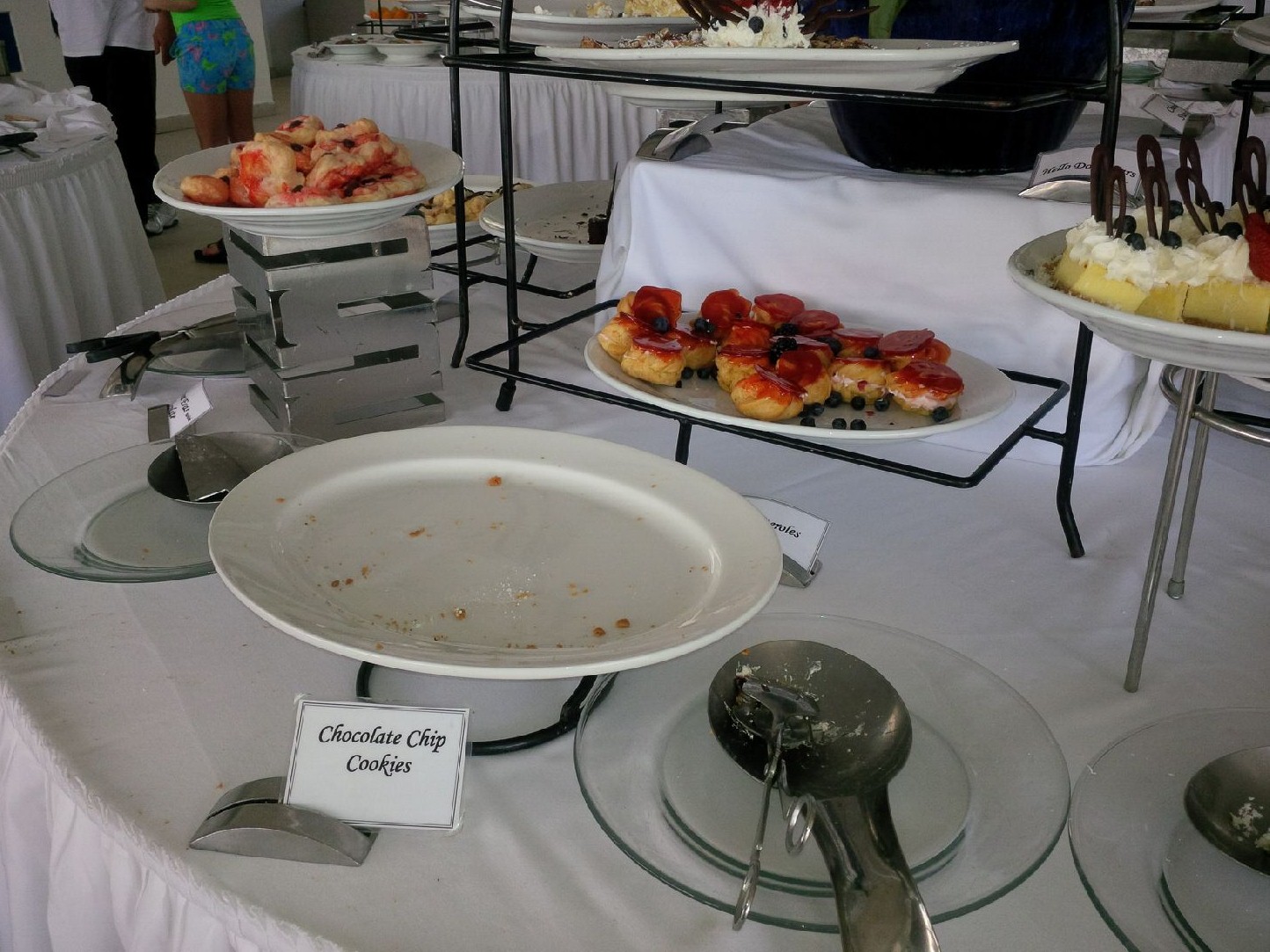
Chocolate chip cookies are now on the endangered species list.

Chocolate chip cookies are now on the endangered species list.

Is there a more disappointing sight at a buffet table?

The background:  during a week’s stay at an all-inclusive resort, it fascinated me that the plate of chocolate chip cookies was nearly ALWAYS empty on a buffet table filled with more than a dozen different types of desserts.  This meant that…

– People congregated around the table waiting for a new batch to come out
– They discussed with each other how annoying it is while they waited
– The arriving cookies were snatched up within one minute of being placed on the table
– And thus…the waiting process began all over again for those not quick on the draw

Seeing the imbalance of so many desserts go to waste, while unhappy customers fought each other for elusive cookies, finally overwhelmed me.  So I asked the restaurant manager:  why don’t you guys just make more cookies?

Are you sitting down?  It’s corporate policy for them to make an equal amount of desserts every night, regardless of how many are consumed.  So…even though it’s cheaper to make chocolate chips than, say, strawberry infused profiteroles – and people would rather eat the chocolate chips than said profiteroles – they aren’t allowed to deviate from the plan because it’s “corporate policy.”

When I asked why they don’t just change the policy, I got the answer that makes business strategists and marketers cringe with pain:  “we’ve just always done it this way, so corporate won’t want to change it.”  And yet…a quick poll of the servers proved that it’s the number one complaint (in most cases, the ONLY complaint) from their diners every single night.

Learn a sweet lesson from these cookies, people.  If something is “broken” at your business that causes repeated and longstanding unhappiness among your guests…FIX IT.  Don’t make excuses or hide behind habit or corporate policy…JUST FIX IT.  Operational and financial challenges may slow you down, but don’t let them stop you from solving it.

Especially if cookies are involved.  Never get between people and their cookies, my friends. It doesn’t end well for you.

Branding lessons from the deli counter.

February 26, 2014
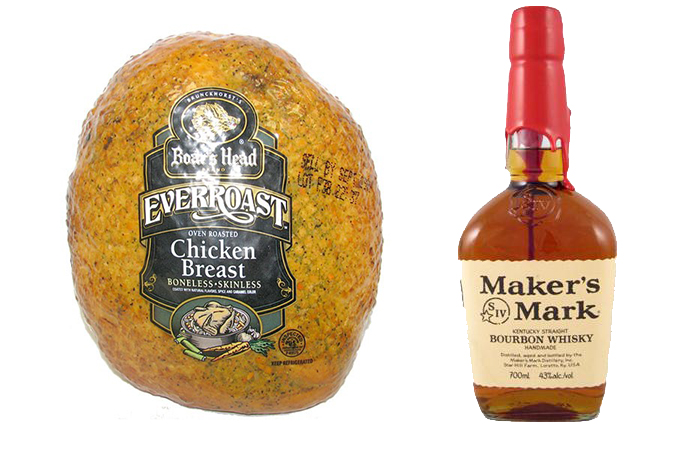
An unlikely pair of status symbols?

An unlikely pair of status symbols?

A few weeks ago, I met a “Grey Goose girl” and a “Maker’s guy” at the chic penthouse bar at The Standard in NYC.  And while I was skeptical that the claims of these two early-twenty-somethings could withstand a blindfold taste test, I wasn’t surprised.  Liquor companies have made an art form out of branding, which means that specifying your liquor to a bartender is like defining who you are to the world around you.

But who knew deli meats held the same power?

This past weekend, I met an “EverRoast® Man” at the deli counter of my local grocery store.  He was the third hipster twenty-something to order EverRoast by name while I was standing there waiting for my own (non-branded) order to be fulfilled.  This shot my marketing radar up to high alert, so I asked him… why ask specifically for EverRoast and not just a half-pound of chicken breast?  Is it better than “regular” chicken breast?  His answer:  “Ever since I was a little kid, I’ve just always been an EverRoast Man.”

Poor guy.  I’m sure he never expected me to investigate this intriguing proclamation.  But I did a bit of research later and learned that Boar’s Head EverRoast Oven Roasted Chicken Breast debuted in 2009.  And since he certainly looked older than five to me, his claim was in tatters.

So why the fib?  Because branding WORKS.  People use brands – whether claiming to love them or hate them – to shape their own image.  From cars and clothes to liquor, sunglasses, watches, sporting goods, music, coffee, deli meats (!), and more…we gravitate toward brands that we feel accurately portray the image we want projected to our audiences.  In short:  it’s like co-op marketing.  Who needs a personal marketing budget when you can bask in the halo effect created by brands that have already spent billions of dollars defining the image you aspire to have?

Successful branding takes time, consistency, and…yes…money.  A brand needs to be clearly defined and have a point of view, and then stand up to scrutiny over and over and over again before it becomes powerful enough for people to identify with it.  But when it’s done right…damn, it sure does work.

So, marketing professionals…the next time you get resistance to spending money on branding, send your boss to the local supermarket deli counter.  One chat with an EverRoast Man or an Ovengold® Girl and they’ll change their tune faster than you can make a sandwich.

Footnote:  For more branding giggles (and perhaps a new lunch suggestion), check out the online Boar’s Head Digicatessen®.  For my next career, I think I want to name deli meats.  It seems like a fun job.

One “great” way to improve your writing.

October 24, 2013

Here’s a “great” way to improve your writing.

Would you rather go to a “great conference” or an “informative and entertaining conference?”  And would you rather stay in a hotel that’s “great”…or one that’s charming, impeccably-run, intimate, luxurious, filled with character, chic, rustic, or a culinary delight?

Here’s the thing:  often times, the word “great” is just a lazy nod to positivity that doesn’t actually do justice to a description.  Saying something is great gives the reader no indication of WHY it’s great, which is actually the information most useful to them.  You could tell a friend that the food was great at a restaurant you tried, but “great” to you could mean spicy and rich, and “great” to your friend could mean mild and tame.  You can tell your guests that they’ll have a great shopping experience at your store, but do you mean the service is gracious, the layout is simple to navigate, the prices are easy on the wallet, or the selection is extensive?

This matters most when you’re writing a piece of communication that intends to persuade your audience, for three reasons:

  • Using “great” instead of actually describing what you mean is a lost opportunity to make a connection that resonates with them and engages their attention.
  • If you say something is “great”…and then you just have to go on to describe it using other words anyway…then you’ve wasted words with an unnecessary comment, and created a trigger that could relax their attention span (nothing sabotages attention faster than perceived “blah blah” in writing).
  • Relying on the word “great” too often snares you in the trap of sounding trite.  And trite never rings true, so your words won’t be effective.

Here’s how to use the word less frequently:  be aware of it.  Every time you start to write the word “great” in a sentence, just ask yourself…what do I really mean?  Take a moment to find more suitable words/phrases and your writing will transform into richer, more sophisticated communication.  This is likely to annoy you at first (flexing your vocabulary muscles takes time and practice), but soon it will become second nature.  Make the site thesaurus.com your new best friend.

There certainly may be times when “great” does the job (Q: “Can we meet at 8pm?”  A: “Great!”).  But a heightened awareness of using the word at all will prevent you from using it as a crutch.

And if you’re thinking of cheating by just adding a bunch of exclamation points to make the word “Great!!!!!!!!!!!” seem more powerful… here’s why that won’t work.

For more great insightful nuggets – from how to stop using the word “I” to why you should stop asking for things “ASAP” – check out our writing tips.

Brilliant use of a housekeeping tip envelope.

July 9, 2013

They are a necessary evil.  And yet…it IS kind of weird that so many US hotels leave an envelope in your room, encouraging you (obligating you?) to tip your housekeeper.

I understand the need for it, as it’s easy to forget – or ignore – tipping someone you likely never see (and gratuities are often part of a housekeeper’s overall compensation).  But it seems so tacky.  No one likes it when a bellman or doorman stands there with his hand out, and the “begging envelope” is equally ungracious.

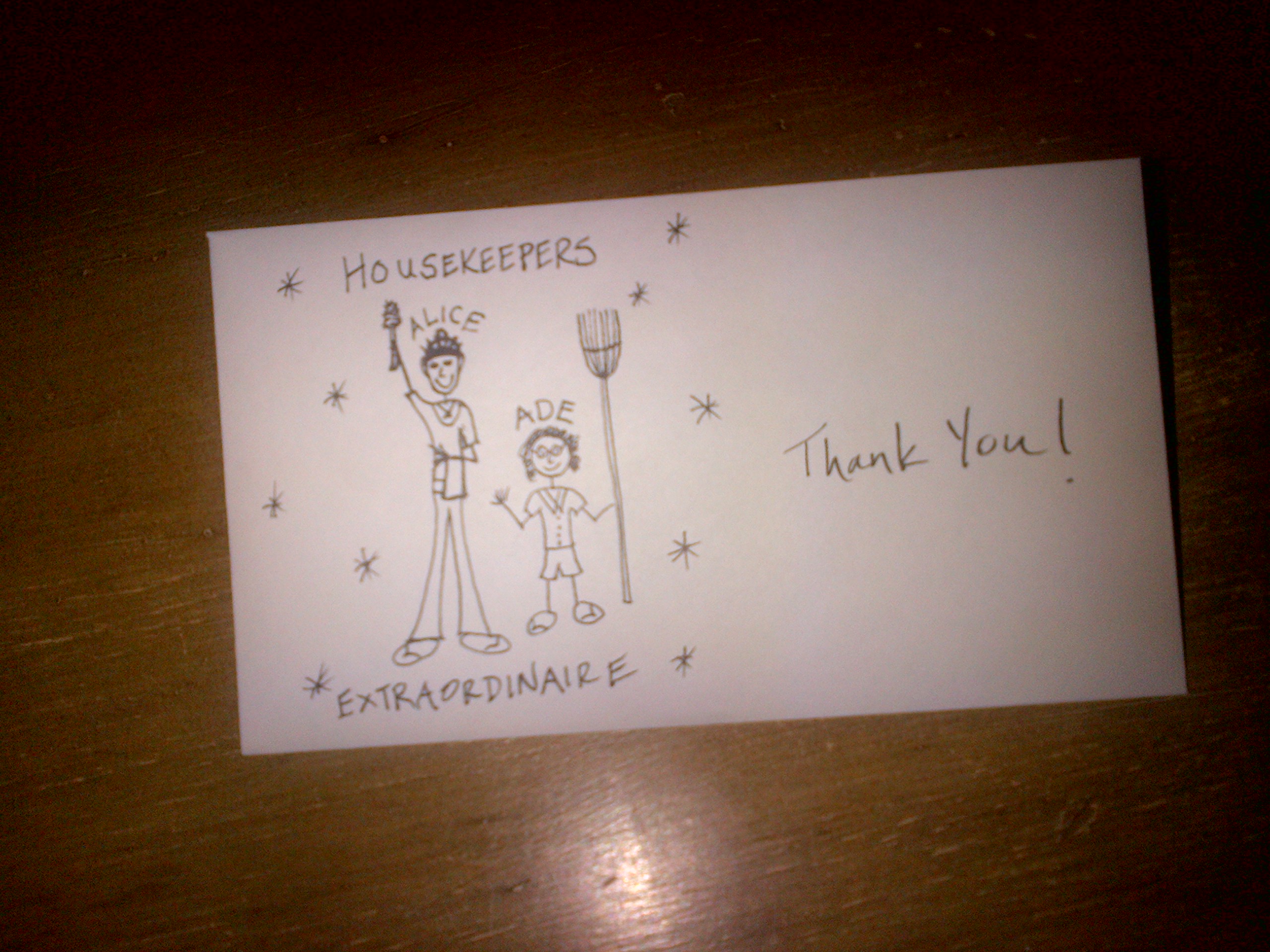
That’s why I laughed aloud with pleasure when I saw the housekeeping gratuity envelopes in the rooms at The Inn at Manchester in Manchester Village, VT.

 IMG-20130507-01750


Absolutely brilliant.  This envelope single-handedly…

  1. Creates a relationship with guests
  2. Makes people feel taken care of by a human being (not a fill-in-the-blank housekeeper du jour)
  3. Showcases the warmth and personality of the brand
  4. Surprises the guests and makes them smile
  5. Softens  “the ask” with a bit of humor

What’s the lesson here?  With a little bit of love and thought, you can find ways to make ordinary guest touch points create a lasting, positive impression.  And you can’t “fake” making something personal…if you put love into it, that’s what will shine through.

Case in point:  I saw this envelope when I was visiting the property with another Redpoint staffer just for a site tour.  And even though I wasn’t staying in the room, I wanted to give a tip to Alice and Ade…just for being adorable.

Why this tiny little Fiat won my big marketing heart.

January 25, 2013
Image

If I could give this car a hug, I would.

When I stepped up to the Alamo car rental counter last week to pick up a car for a weekend trip, I could have won a gold medal if “Multitasking” were an Olympic sport.  I was schlepping bags, answering emails, planning what to eat for lunch, remembering things I forgot to pack, and just generally unfocused on the task at hand.  I rent cars all the time, and I know the drill, so basically, I put that part of my brain on autopilot – license, credit card, initials in a zillion places, give blood and your first born, and so on.

But when the service agent said these words, all distractions disappeared instantly and I snapped to attention like a guard dog on command:  “You’re in that tiny little Fiat outside.  Would you like to upgrade to something a bit safer?”

Did I snap to attention because I was worried about my safety?  Absolutely not.  (Mom, if you’re reading this…sorry.)  What happened was…the marketer in me became fiercely indignant on behalf of the Fiat brand.  All distractions were banished by these thoughts:

  • Why would a car rental company want to imply that it rents ANY cars that are unsafe?
  • Do the Fiat sales and marketing executives – who are probably hopeful that people who rent their car could be hooked into buying one – know that their car is being portrayed as “unsafe” at the car rental counter?
  • Does Alamo script their service agents with this language to scare people into upgrading to a more expensive car?  If so…shame on them.  If not…perhaps they need a better training program to educate their team how to “sell up” without “putting down.”

As all these thoughts crowded my brain in the span of 10 seconds, I realized that I was staring at the service agent like she had just committed a heinous crime.  And perhaps she did, from a branding perspective.  But I know that making a fuss about it would probably cast me as an unbalanced lunatic, so I just looked her squarely in the eye and said, “The Fiat is absolutely perfect.  I’ll take it.”

Clearly,  nothing wins my allegiance faster than a marketing underdog.  Fiat, if you’re ever looking for a PR firm in the US, give Redpoint a call.  🙂

Fun with marketing…no matter how boring the product.

December 5, 2012

Recently, while leading a workshop about Effective Presentation Techniques, I shared a secret with the attendees:  people like to be entertained.  So if you bring fun and joy to whatever you’re selling, you’ll get their attention…and that’s the first step toward ensuring they receive your message.

At the break, one attendee approached me with this lament:  “I sell pretty boring products, so making them fun just isn’t an option for me.”  

Oh young grasshopper…take heart.  With the right perspective, you can make ANYTHING fun.  I give you…Jewish food, a Vietnamese restaurant, and men’s razors.

Image

Artful arrangement of Jewish food draws a double-take from passersby on the Upper West Side of NYC.

Image

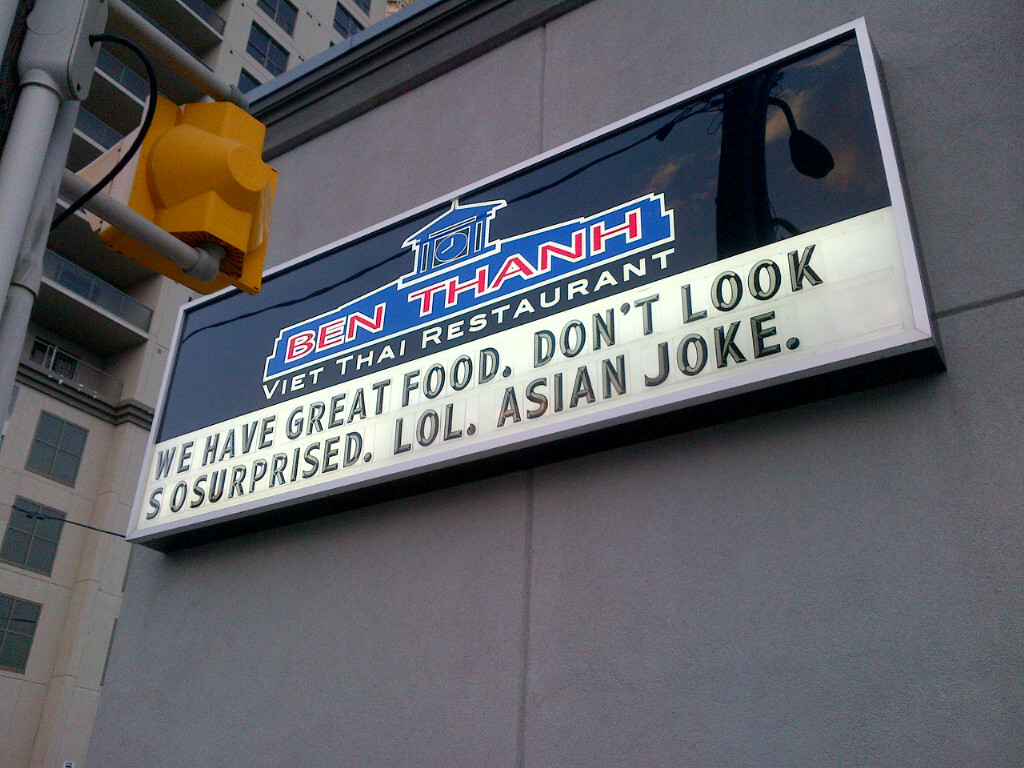
A Viet-Thai restaurant in Canada draws new patrons with this sassy sign outside their front door.

And seriously…take 1 minute and 30 seconds and watch this commercial for Dollar Shave Club.  Who knew selling razors could be so entertaining?

The bottom line is…with the right perspective, you can bring a little bit of humor to any subject – appropriately, of course.  Would I recommend adding levity to a speech or ad about child abuse?  Absolutely not.  But an otherwise dry subject – like razor blades?  Heck yes!…it’s a fabulous competitive advantage when you can make people smile.

Want one more smile before you’re done reading this post?  Check out our post from last summer to see how this movie theater made their “Don’t Talk or Text During the Movie” warning an absolute riot of hilarity: Alamo Drafthouse Warning.  The gang here at Redpoint is STILL chuckling over that one.  🙂

Ooops. You broke the spell.

October 26, 2012

Recently, I had a spectacular dining experience at Talula’s Garden in Philadelphia.  And I mean…spectacular.  From the thoughtful design details – both in the outdoor garden and the main restaurant/bar areas – to the creativity of the menu, each touchpoint makes you feel as if you’ve been transported to a chic urban farmhouse.

The depth of authenticity was impressive, especially to a marketer like me, who can spot a “staged authentic experience” from a mile away.  By the time the second course arrived, I had completely turned off my branding radar and lost myself in the enjoyment of the evening.  It was heaven…until I went to the bathroom.

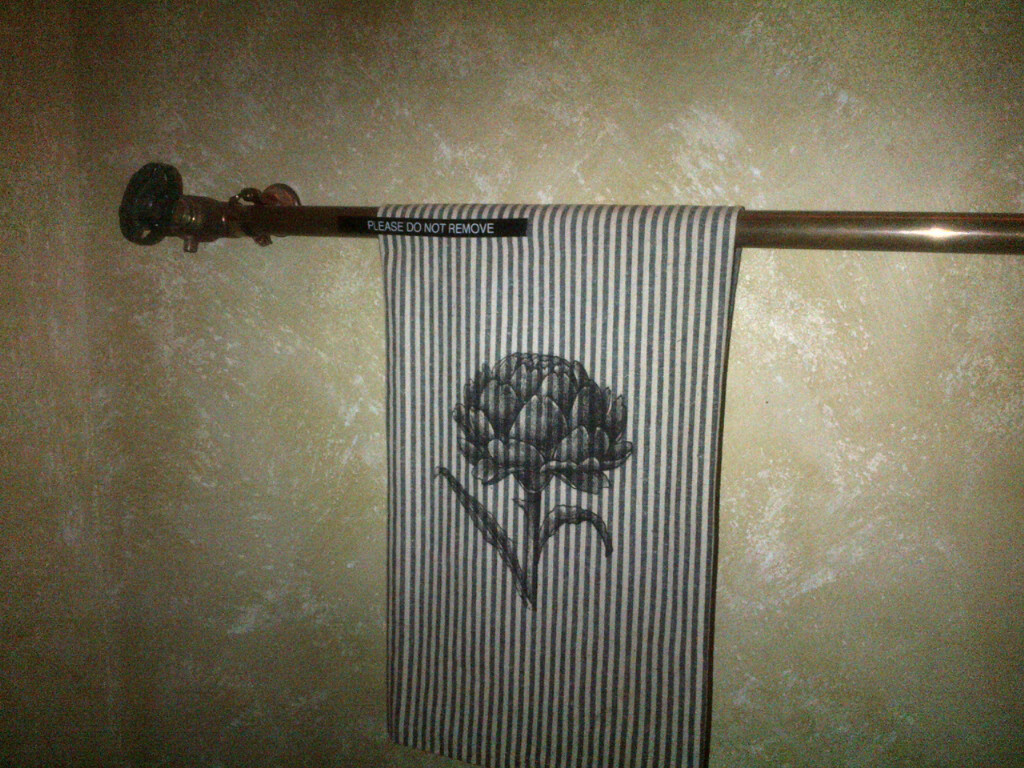
Inside each adorable little stall, on the wall behind the toilet, I found this:

…and POP! went the bubble of authenticity.  The farmhouse hand towel is a pleasing design detail.  The black plastic Please Do Not Remove label…not so much.  I felt a little like Dorothy when she went behind the curtain and discovered that the “Great and Powerful Oz” was just an average little man.

What’s the lesson here?  If you have to provide instructions for guests in order to maintain your image of authenticity, you’re just breaking the spell.  Find another way to achieve your objective that doesn’t undermine the effective branding investment you’ve made elsewhere.

But don’t let this stop you from dining at Talula’s Garden the next time you’re in Philly.  You will completely excuse the hand towel label in favor of the absolutely delicious cuisine.  And do yourself a favor:  order the Dark Chocolate Bacon S’mores.  You won’t regret it.

Our motto at Redpoint?  Everything is better with bacon.  Especially if chocolate is involved too.  🙂

A marketing throwdown: worms, 1…PR professional, 0.

September 20, 2012

It’s a running joke among my friends and family that I find marketing lessons everywhere I turn.  And recently, worms taught me a pretty big one.

I stumbled upon this “Live Bait” vending machine while driving through the Muskoka Lakes region of Ontario, Canada.  I wanted a soda.  What I got instead was a new perspective.

Worms sold in vending machines?  It was like I discovered a new planet.  Though I don’t fish, and have absolutely no reason to ever purchase a worm, I thought this idea was the coolest thing ever.  Just like the Jetsons!  I took pictures, sent them to friends back in NYC (who shared my awe), and enjoyed the rest of my drive with that warm glow marketers get when they feel like they’ve discovered something truly “new.”

Until I got home, and then…Enter:  GOOGLE.

Turns out, worms are sold in vending machines all over the world.  As are gold bars, live crabs, mashed potatoes with gravy, bicycles, fresh bananas, sneakers, hypodermic needles (scary), eggs, freshly made cupcakes, inflatable inner tubes, and a host of other items that I had never considered vending machine material.

As I perused slide show after slide show of website articles revealing quirky vending machines across the globe, I felt like a dope.  I had fallen prey to the cardinal sin of the PR profession:  thinking something is NEW when it’s really just NEW TO YOU.  How many times have my partner Vickie and I cautioned our clients against this very same PR sin?  Shame on me.  “A” for enthusiasm… “F” for marketing savvy.

These worms reminded me of two vital rules of marketing:

  1. Google is the greatest tool in a marketer’s toolbox – see if your idea is new, find a unique solution to a problem, discover how other cultures conquer challenges…all in less than 2 seconds and without leaving your desk.
  2. Every new discovery is an opportunity – don’t be surprised if a Redpoint hotel client soon imports an Italian vending machine that prepares pizza from scratch, including freshly kneaded dough.

I’ve been exposed to a lot of quirky stuff in my 20 years as a travel marketer.  I know why fish wheels in Alaska are as treasured as Red Sox season tickets in New England, that women in Armenian nightclubs dance with themselves in the mirror to attract the attention of men, and that you can turn a tractor supply store into a bar in rural West Virginia (while still selling tractors) and no one will bat an eye.  Each new discovery has fueled my sense of wonder at the world.

But worms sold in vending machines trumps them all.  Why?  I thought it was so cool, it actually made me want to go fishing…just so I could buy some.

Now THAT’s good marketing.  🙂

The golden rule of using social media for business.

July 3, 2012

Beware of the new illness that’s catching among marketers…and their bosses.  It’s called  irrational fan base envy and when it infects you, poor marketing decisions are bound to follow.

You can catch this illness from even the briefest exposure to ANY social media channel, such as Facebook, Twitter, Pinterest, and YouTube.  The infection is often triggered by media reports that sensationalize the wildly positive impact of social media as a marketing tool.  Symptoms, which mirror the frenzied fever associated with a gold rush or get-rich-quick-scheme, include:

  1. Obsessing over how many fans/followers your brand has vs. other brands in your competitive set
  2. Setting arbitrary-yet-super-high fan base targets based on absolutely nothing realistic
  3. Spending money to increase your fan base numbers without spending money to sustainably enhance the quality of your messaging content

Interestingly, social media novices are the most susceptible to irrational fan base envy and they also succumb the hardest.  The more immersed you become in marketing through social media, the greater your immunity becomes.  Why?  Because you discover that having a zillion fans does not impact your bottom line unless you engage them…and engaging them takes time and money, just like any other marketing initiative.  And it doesn’t matter if your competitor has triple the number of fans that you have…what matters is how YOU interact with YOURS.

The golden rule of using social media for business is this:  the success of your social media efforts are in direct proportion to the amount of love you put into them.  If you treat social media like a pesky item on your to-do list (“make post to Facebook today…check;  pin something to Pinterest board today…check”), you can’t expect social media to love you back.  It simply doesn’t work that way.

The only cure for irrational fan base envy is to change your thinking.  Stop focusing on QUANTITY and start focusing on BALANCE.  Engage your current fan base, so that a high percentage of them are liking, commenting, sharing, re-tweeting, re-pinning, and in many other ways becoming a messenger for your brand story.  If you achieve that, it means you’re on the right track to harnessing your fans.

Then…as you add more fans to your community…they have the potential to become more than just empty numbers that look good on a stat sheet.  They can become your brand evangelists, returning the love to your bottom line exponentially.

Just remember…as you start to change your thinking and infuse a little more love into your social media efforts…be mindful of the other golden rule, shared by Redpoint in a previous post:  You Can’t Find Love on a Spreadsheet.  Who knew you could learn so much from ordering dumplings at Buddakan?